


The Layer 8 Difference

Immersive learning and knowledge retention

Australia has become a hotspot for cyber attacks

Modern cyber attacks rarely begin with sophisticated hacking. Instead, they increasingly rely on phishing, impersonation, social engineering and credential theft to gain access to organisations.

The Australian Cyber Security Centre Annual Report 2024 consistently shows that account compromise and credential theft are among the most common outcomes of cyber security incidents, making user identities a frequent target for attackers.

In Australia, cybercriminals increasingly target identities and user credentials because obtaining valid login details is often easier than bypassing technical security controls.

Stat2-1-q862ba93g9abygrhtk12csbti7m2vdgb043b7a0mtw

The OAIC reported that 60% of cyber security-related data breaches involved compromised credentials.

Business Email Compromise (BEC) cost Australian organisations $55,000 per incident on average.

Phishing, impersonation and other social engineering techniques remain common methods used to gain unauthorised access to organisations.

Effective security awareness programs focus on changing user behaviour and improving the ability to recognise and respond to threats - not just compliance.
The science of gaining and maintaining cyber awareness

While many would agree that cyber awareness training is fundamental for any business, traditional cyber training is too easily forgotten or ignored by busy staff. 

If you struggle to remember traditional training sessions in the days and weeks after completion, you are not alone and do not need to be concerned with your cognitive ability. The science behind knowledge retention backs you up!

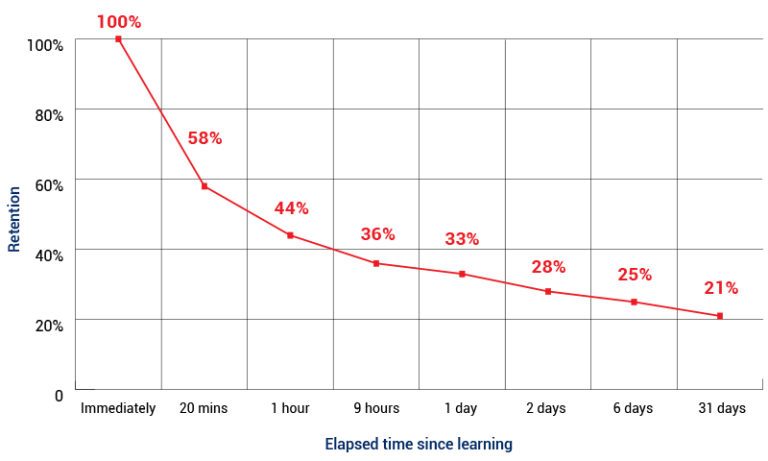
Research confirms that information retention is inversely proportional to the elapsed time since the training. The forgetting curve is a mathematical formula that describes the rate at which something is forgotten after it is initially learned. This idea is over 100 years old from German psychologist Hermann Ebbinghaus who was among the first scientists to perform experiments to understand how memory works.

Ebbinghaus Forgetting Curve

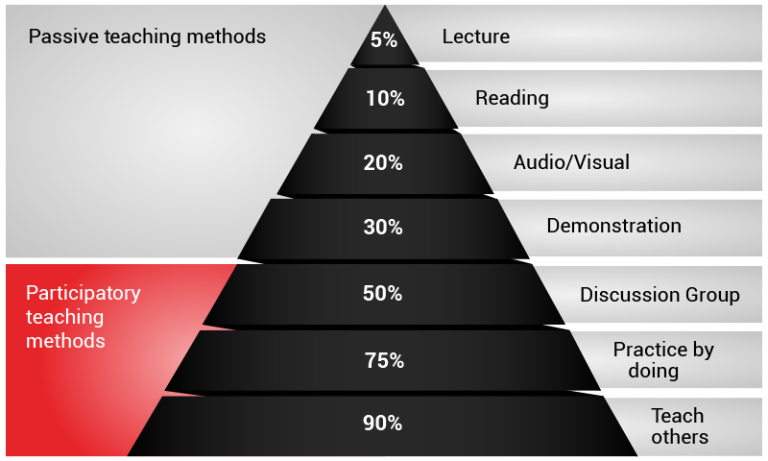
Time, however, is not the only foe of knowledge retention. How you impact knowledge plays a crucial role in whether it is retained and for how long. The Learning Pyramid of Knowledge Retention Rates breaks down teaching methods and their effectiveness in improving retention. The pyramid highlights the need for engagement and putting learning into practice as vital for retention.

The Learning Pyramid: Knowledge retention rates

Converting human risks into a human firewall

Most cyber attacks don’t start with advanced technical attacks. They begin with phishing emails, stolen credentials, impersonation attempts and other forms of social engineering designed to trick people into providing access.

Layer 8 helps organisations reduce this risk by improving how employees recognise and respond to cyber threats. Our focus is on changing day-to-day behaviours rather than treating security awareness as a compliance requirement.

Training is designed around the threats people encounter most often, including phishing, business email compromise, credential harvesting, QR code phishing and AI-generated scams.

Our approach combines interactive learning, regular reinforcement and practical exercises that reflect real-world attack methods. This helps employees retain what they learn and apply it in their daily work. The outcome is a more security-aware workforce that can identify suspicious activity, protect sensitive information and respond appropriately when threats occur.

Fill in the form to learn more about the science behind retaining knowledge

We have over a decade of experience delivering cyber awareness education to businesses. We share our best practices and corporate knowledge in line with industry best practices and global standards throughout every consulting project. In this way, we transfer our expertise to our customers, providing you with the ability to confidently monitor, manage, and improve your risk posture on an ongoing basis.

Layer 8 Security
Privacy Overview

This website uses cookies so that we can provide you with the best user experience possible. Cookie information is stored in your browser and performs functions such as recognising you when you return to our website and helping our team to understand which sections of the website you find most interesting and useful.